
















Author: admin

  • How to Cut Pet Care Costs Without Cutting Corners

    How to Cut Pet Care Costs Without Cutting Corners

    Pet ownership brings ongoing expenses, and many owners eventually ask the same question: how can I spend less while still giving my dog or cat good care? The most effective answer is not to chase the cheapest option in every category. Real savings usually come from planning ahead, avoiding waste, preventing predictable problems, and staying organized.

    This guide explains practical ways to reduce everyday pet costs without compromising comfort, nutrition, hygiene, or preventive care. These ideas can help new pet owners, multi-pet households, and anyone trying to manage a tighter budget responsibly.

    Start by separating essential costs from flexible costs

    Before trying to save money, it helps to know where your pet budget actually goes. Some costs are hard to avoid, while others can often be adjusted.

    Usually essential expenses

    • Core food and fresh water
    • Routine veterinary checkups
    • Preventive care recommended by your veterinarian
    • Basic grooming and hygiene supplies
    • Safe identification and transport items
    • Litter or waste disposal supplies

    Often flexible expenses

    • Impulse toy purchases
    • Frequent treat buying
    • Duplicate accessories
    • Premium add-ons your pet may not need
    • Convenience purchases made in a rush

    A useful first step is to review the last two or three months of pet spending and group purchases into these two categories. Many owners find that small, repeated extras add up faster than expected.

    Buy with a monthly plan instead of reacting week by week

    One of the easiest ways to overspend is to buy items only when they run out. Emergency shopping often leads to higher prices, poor comparisons, and duplicate purchases.

    Create a simple pet supply list

    List what your pet uses regularly, such as food, litter, poop bags, dental items, grooming supplies, or cleaning products. Then note roughly how often each item needs replacing.

    Check what you already have before shopping

    Many households accidentally overbuy because one family member does not know what another has already purchased. A quick stock check prevents waste and reduces clutter.

    Set reorder reminders

    When you know your pet food usually lasts four weeks or your litter lasts two, you can compare prices calmly and buy before supplies become urgent. This is also where a digital organizer can help. Keeping recurring pet supply notes and reminders in one place can make budgeting more consistent, especially in households with more than one pet.

    Save on food by focusing on value, not just price per bag

    Food is often one of the biggest recurring pet expenses, so it makes sense to review it carefully. However, cheaper is not always more economical if the product is wasted, poorly stored, or unsuitable for your pet.

    Compare cost by weight or serving size

    Look beyond the sticker price. A larger bag may cost more upfront but less per kilogram or per meal. On the other hand, bulk buying only saves money if the food stays fresh and your pet actually eats it reliably.

    Avoid unnecessary food switching

    Changing foods frequently because of sales, trends, or impulse buying can lead to half-used bags and fussy eating habits. If your pet does well on an appropriate food, consistency often saves more than constant experimentation.

    Measure portions carefully

    Overfeeding increases food use and may contribute to unhealthy weight gain. Using a scoop or kitchen scale can reduce waste and help you notice how quickly supplies are being used.

    Use treats strategically

    Treats can become a hidden budget drain. Instead of giving them casually throughout the day, reserve them for training, enrichment, or specific routines. Breaking larger treats into smaller pieces can also stretch them further for many dogs and some cats.

    Cut grooming costs with a realistic home routine

    Professional grooming may still be necessary for some pets, especially depending on coat type, but many basic tasks can be done at home with patience and the right tools.

    Low-cost grooming habits that help

    • Brush regularly to reduce matting and shedding buildup
    • Wipe paws after muddy walks to reduce cleaning needs at home
    • Trim nails only if you are confident and your pet tolerates it
    • Clean bedding on a routine schedule to reduce odors and wear
    • Introduce grooming gradually so your pet cooperates better over time

    If your dog or cat has special coat, skin, or nail needs, ask your veterinarian or groomer for safe general guidance on maintenance between appointments. A short demonstration can sometimes save repeated grooming costs later.

    Use preventive care to avoid more expensive problems

    Preventive care may feel like an immediate cost, but missed routine care can become more expensive in the long run. The goal is not to avoid veterinary spending. It is to avoid avoidable problems and late interventions where possible.

    Do not skip routine checkups

    Regular wellness visits help you discuss body condition, dental care, skin issues, mobility changes, and general wellbeing before small concerns become harder to manage.

    Keep up with home care basics

    • Regular tooth brushing or dental hygiene routines if recommended
    • Weight monitoring
    • Ear and coat checks
    • Safe exercise and enrichment
    • Good hygiene around feeding and toileting areas

    Prevention does not guarantee lower costs, but it often reduces waste, helps you spot changes earlier, and supports better everyday care.

    Make toys and enrichment last longer

    Pets do not always need a constant stream of new products. Many become just as interested in rotation and novelty as in expensive purchases.

    Try a toy rotation system

    Instead of leaving every toy out at once, store some away and rotate them every few days. This can renew interest without more spending.

    Choose durable basics over frequent replacements

    A few sturdy, easy-to-clean items can be better value than many cheap toys that break quickly. Supervise use and remove damaged items promptly for safety.

    Use simple home enrichment

    • Short training sessions for dogs
    • Snuffle-style feeding activities using safe household setups
    • Cardboard box exploration for cats
    • Treat hunts in safe areas
    • Regular interactive play sessions

    Mental stimulation does not have to be expensive. Often, time and consistency matter more than price.

    Avoid duplicate purchases by organizing pet records and supplies

    Disorganization leads to unnecessary spending. Owners may rebuy flea combs, leads, brushes, medications, food scoops, or travel bowls simply because they cannot find what they already own.

    Use one storage area for pet essentials

    Keeping supplies together makes it easier to see what needs replacing and what does not. Labeling bins for food, grooming, travel, and health items can help even in small homes.

    Track dates and purchases

    Recording when you bought food, litter, or grooming tools gives you a clearer idea of monthly costs. It also helps identify whether a product truly lasts as long as expected.

    For owners who prefer digital tracking, PLM Pet Life Manager can be a practical way to keep important pet information and recurring care tasks organized in one place, which may make budgeting and supply planning easier over time.

    Be careful with bargain hunting

    Saving money does not mean every discount is a good deal. A lower price can still be poor value if the product is low quality, unsafe, unsuitable, or likely to be wasted.

    Common money-saving mistakes to avoid

    • Buying huge quantities your pet may not finish
    • Choosing products only because they are on sale
    • Replacing durable items with cheap short-lived versions
    • Ignoring storage needs for food and supplies
    • Skipping preventive basics to save in the short term

    Smart savings come from informed decisions, not from cutting every cost as far as possible.

    Build a pet emergency buffer, even if it starts small

    Unexpected costs are part of pet ownership. Even a modest emergency fund can reduce panic spending and help you respond more calmly when something urgent happens.

    If saving a large amount feels unrealistic, start small and add to it regularly. Consistency matters more than perfection. You can also review whether pet insurance suits your situation, budget, and risk tolerance, but compare terms carefully and avoid assuming all policies cover the same things.

    Final thoughts

    Cutting pet care costs responsibly is mostly about planning, not depriving your pet. Measure food, reduce waste, rotate toys, stay on top of preventive care, and organize supplies so you stop paying twice for the same things. These habits are simple, but together they can make a noticeable difference.

    The best budget strategy is one you can maintain. When your pet routine is organized and predictable, it becomes easier to protect both your finances and your pet’s wellbeing at the same time.

    https://pet.ckventures-websites.com/

  • How to Create an Enrichment Routine for Indoor Cats Without Overcomplicating It

    How to Create an Enrichment Routine for Indoor Cats Without Overcomplicating It

    Many indoor cats have safe, comfortable lives, but safety alone does not meet all of their behavioural needs. Cats are natural hunters, climbers, observers, scratchers and problem-solvers. Without enough opportunities to express those instincts, some cats may become bored, restless or destructive. The good news is that enrichment does not need to be expensive or time-consuming. A simple, consistent routine can make a big difference.

    This guide explains how to build an indoor cat enrichment routine step by step, what activities to include, and how to adapt the plan to your cat’s age, energy level and personality.

    What cat enrichment really means

    Enrichment is anything that encourages your cat to use natural behaviours in a safe home environment. That includes play, climbing, scratching, exploring, foraging, resting in secure places and watching the world around them.

    Good enrichment is not about keeping a cat busy every minute of the day. It is about offering regular chances to move, think, hunt, observe and relax. A strong routine usually combines physical activity, mental stimulation and environmental variety.

    Signs your indoor cat may need more enrichment

    Every cat is different, but a lack of stimulation can sometimes show up in everyday behaviour. Watch for patterns such as:

    • Frequent night-time zoomies or restlessness
    • Scratching furniture despite having a scratching post
    • Demanding attention constantly
    • Overeating or seeming fixated on food
    • Knocking items off shelves repeatedly
    • Excessive vocalising for no obvious reason
    • Long periods of inactivity followed by intense bursts of energy

    These behaviours do not always mean boredom, but they can be a useful reminder to review your cat’s daily routine and environment.

    The five parts of a balanced indoor cat enrichment routine

    1. Interactive play

    Interactive play is one of the most important parts of enrichment because it mimics stalking, chasing and pouncing. Wand toys, feather teasers and soft toys dragged along the floor can work well when used in short sessions.

    Try to move the toy like prey rather than waving it randomly in the air. Pause, hide, dart and change direction. Let your cat feel successful by catching the toy regularly.

    2. Independent activities

    Your cat also needs things to do without you. Puzzle feeders, treat balls, cardboard boxes, tunnels and safe window perches can keep the environment interesting during the day.

    Rotate items rather than leaving every toy out all the time. Even familiar objects can feel new again after a short break.

    3. Vertical space

    Cats often feel more secure when they can climb and observe from above. Cat trees, shelves, sturdy furniture access and window platforms can all add useful territory, especially in smaller homes.

    Vertical space is especially valuable in multi-cat homes because it can help each cat choose distance and resting spots.

    4. Scratching options

    Scratching helps cats stretch, mark territory and maintain their claws. Offer more than one scratching surface, and vary the type if possible. Some cats prefer tall vertical posts, while others like flat cardboard scratchers or angled boards.

    Place scratchers near sleeping areas, entrances and favourite resting spots, since cats often like to scratch after waking or while moving through their territory.

    5. Sensory enrichment and quiet rest

    Enrichment is not only active. Watching birds through a window, sniffing safe natural scents, listening to household sounds and resting in covered beds or quiet corners all matter too. Cats need stimulation, but they also need recovery time in spaces where they feel safe and undisturbed.

    How to build a simple daily routine

    The easiest way to succeed with enrichment is to keep the routine realistic. A few short sessions spread through the day often work better than one long session that is hard to maintain.

    1. Start with two interactive play sessions each day. Aim for around 10 to 15 minutes in the morning and again in the evening.

    2. Add one food-based enrichment activity, such as a puzzle feeder, snuffle mat designed for cats, or a small scatter feed using part of the daily meal.

    3. Make sure your cat has at least one scratching area, one hiding spot and one raised resting place.

    4. Rotate toys every few days so the environment stays interesting without creating clutter.

    5. Observe what your cat actually enjoys and adjust the plan instead of copying a perfect routine from someone else.

    For many households, this is enough to create a strong foundation.

    A sample enrichment schedule for an indoor cat

    You do not need to follow a strict timetable, but an example can help.

    • Morning: short wand-toy play session followed by breakfast
    • Midday: window watching, puzzle feeder or cardboard box activity
    • Late afternoon: quiet rest in a comfortable hiding or elevated spot
    • Evening: second play session with chasing and pouncing opportunities
    • Night: a small independent toy or food puzzle if your cat tends to become active after bedtime

    This pattern works well because it alternates activity and rest, which is closer to a cat’s natural rhythm.

    Easy enrichment ideas that cost very little

    You do not need a house full of gadgets. Many effective enrichment tools are simple household items used safely.

    • Cardboard boxes with entry holes
    • Paper bags with handles removed
    • Blankets draped over chairs to create hiding dens
    • Treats hidden in folded towels
    • Homemade obstacle paths using cushions and stools
    • Safe window access for outdoor viewing
    • Short training sessions using rewards and simple cues

    Always supervise new items at first and remove anything that could be chewed into unsafe pieces or trap your cat.

    How to adapt enrichment for different cats

    Kittens

    Kittens usually need frequent play and plenty of novelty, but sessions should stay short. They benefit from climbing options, chase games and safe objects to investigate. Because they are still learning, supervise closely and keep the environment safe.

    Adult cats

    Healthy adult cats often do well with a stable mix of daily play, foraging and quiet observation. If your cat seems uninterested, experiment with different toy styles, movement patterns and times of day.

    Senior cats

    Older cats still need enrichment, but it may need to be gentler and more accessible. Lower scratching surfaces, easier climbing routes, softer toys and shorter play sessions can help. If your senior cat suddenly becomes less active or stops jumping, it is sensible to discuss any change with a veterinarian.

    Shy or newly adopted cats

    For nervous cats, start small. A quiet hiding place, a predictable routine and low-pressure toy play from a distance may work better than lots of stimulation at once. Let confidence build gradually.

    Common enrichment mistakes to avoid

    • Using only laser pointers without offering a final toy to catch
    • Leaving toys out permanently until they lose all novelty
    • Choosing enrichment that suits the owner more than the cat
    • Overstimulating a shy cat with too much activity
    • Expecting one expensive item to solve boredom on its own
    • Ignoring rest, hiding and observation opportunities

    The best enrichment plan is one your cat uses willingly and one you can maintain consistently.

    When to review the routine

    It is worth reviewing your setup if your cat’s behaviour changes, if you move home, add another pet or notice that favourite activities no longer hold their attention. Cats can also prefer different types of play as they age. A routine should evolve with the individual cat rather than stay fixed forever.

    Keeping the routine consistent

    Consistency is often more valuable than complexity. If you track feeding times, toy rotation, scratching preferences and activity patterns, it becomes easier to spot what works best. For owners managing multiple cats or busy schedules, using a digital organiser such as PLM Pet Life Manager can help keep routines, notes and pet-care tasks in one place.

    Final thoughts

    Indoor cat enrichment does not have to be complicated. Focus on a few basics: daily interactive play, opportunities to climb and scratch, some food-based problem-solving, and safe places to rest and observe. Start simple, pay attention to your cat’s preferences and build from there.

    A cat-friendly routine is not about constant entertainment. It is about giving your cat regular, meaningful ways to behave like a cat inside your home.

    https://pet.ckventures-websites.com/
  • How to Quarantine New Aquarium Plants Before Adding Them to Your Tank

    How to Quarantine New Aquarium Plants Before Adding Them to Your Tank

    Bringing home new aquarium plants is exciting, but adding them straight into your tank can sometimes introduce unwanted hitchhikers or contaminants. Snails, algae spores, pest eggs, and leftover residues from plant nurseries can all cause problems in an established aquarium. A simple quarantine routine helps protect your fish, shrimp, and existing plants while giving new arrivals time to adjust.

    If you are new to planted tanks, quarantine may sound complicated, but it can be done with a small container, good observation, and a bit of patience. This guide explains why plant quarantine matters, what supplies you need, and how to do it safely step by step.

    Why quarantine aquarium plants?

    Plant quarantine is a short period of isolation before new plants enter your main aquarium. The goal is to monitor the plants and reduce the chance of introducing common problems.

    • Hidden snails or snail eggs
    • Algae attached to leaves, stems, or roots
    • Small pests that can damage plants
    • Residues from fertilizers or growing methods used outside your tank
    • Damaged or melting leaves that should be trimmed before planting

    Even healthy-looking plants can carry things you do not notice at first glance. Quarantine gives you time to inspect and clean them more thoroughly.

    Do all aquarium plants need quarantine?

    In practice, quarantining all new plants is a good habit, especially if you keep sensitive fish, shrimp, or a carefully balanced planted aquarium. It is particularly useful when plants come from open display tanks, mixed holding systems, or unidentified sources.

    Some tissue culture plants are often considered lower risk because they are typically sold in sealed containers and grown in sterile conditions. Even so, it still helps to inspect them, rinse them well, and observe them before planting, especially if you are trying to keep a tank free of pests and algae.

    What you need for a simple plant quarantine setup

    You do not need a full second aquarium to quarantine plants. A basic temporary setup is often enough.

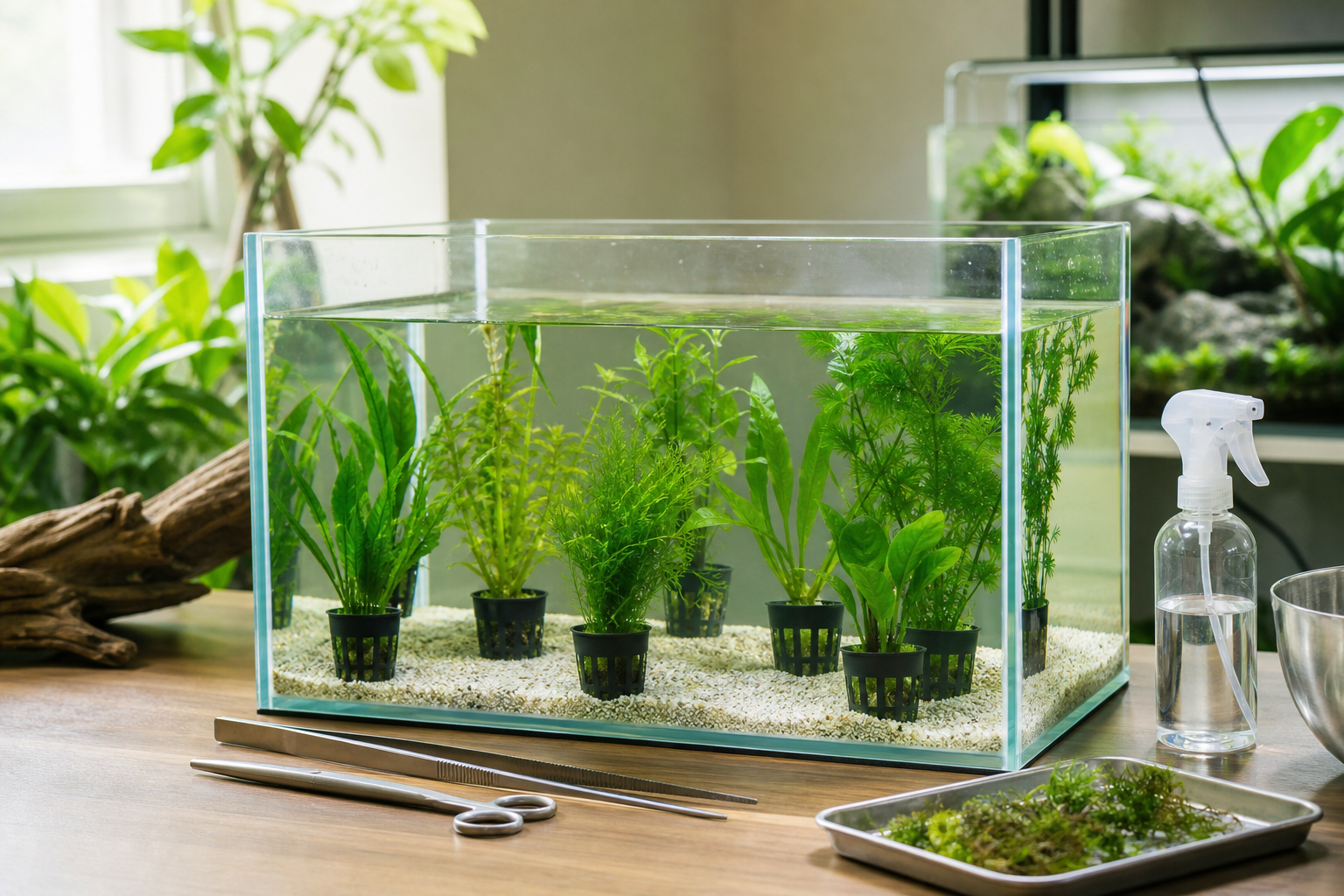
    • A clean bucket, tub, or small spare tank
    • Dechlorinated water
    • A light source suitable for aquarium plants
    • A small heater if your room is cold or your plants are tropical species
    • Gentle water movement if possible, such as a small air stone or sponge filter
    • Clean scissors for trimming damaged leaves
    • Plant tweezers or your hands for handling

    The container should be used only for aquarium-safe purposes and should not contain soap, chemical, or cleaning-product residue.

    Step-by-step: how to quarantine new aquarium plants

    1. Unpack and inspect the plants carefully

    Start by removing any wrapping, rock wool, lead weights, elastic bands, or pots. Check the leaves, stems, roots, and rhizomes closely. Look for:

    • Brown, melting, or transparent leaves
    • Black beard algae, hair algae, or fuzzy growth
    • Snails or gelatinous snail egg clusters
    • Damaged roots or broken stems
    • Insects or tiny moving pests

    Trim away obviously dead or badly damaged plant material. This helps the plant recover and reduces decaying matter in quarantine.

    2. Rinse the plants thoroughly

    Rinse each plant in clean dechlorinated water. Gently swish the leaves and roots to dislodge debris, loose algae, or tiny hitchhikers. Be careful with delicate plants that bruise easily.

    This step alone will not remove every risk, but it can significantly reduce what enters the quarantine container.

    3. Decide whether to do a plant dip

    Some aquarists use plant dips to help reduce pests or algae before quarantine. However, dips must be used carefully because not all plant species tolerate them well. Delicate mosses, fine-leaved stems, and certain sensitive plants may be damaged.

    If you choose to use a dip, always follow reliable species-specific guidance for the dip type and concentration, and avoid guessing. If you are unsure, a rinse plus quarantine observation period is a safer option than using an aggressive dip incorrectly.

    It is also wise to remember that a dip is not a substitute for quarantine. Observation still matters.

    4. Place the plants in the quarantine container

    Add the cleaned plants to your quarantine container filled with dechlorinated water. Arrange them so you can see each plant clearly. Do not overcrowd the container if possible, because crowded plants are harder to inspect and may trap debris.

    Provide moderate light and stable conditions. You do not need a perfect display setup, but the plants should have enough support to stay alive and show whether they are healthy.

    5. Observe the plants for 1 to 2 weeks

    A quarantine period of around 1 to 2 weeks is a practical minimum for many hobbyists. During this time, check the plants daily or every few days.

    • Look for new snails or egg clusters
    • Watch for algae growth becoming more visible
    • Remove dying leaves promptly
    • Check whether stems are rotting or roots are falling apart
    • Confirm that healthy new growth is appearing where possible

    If you notice problems, extend the quarantine rather than moving the plants into the main tank too quickly.

    6. Change water regularly

    Perform partial water changes every few days or as needed if the water becomes cloudy or full of plant debris. Clean water helps you inspect the plants better and reduces the chance of decaying material affecting plant health.

    If you are quarantining many plants together, more frequent water changes may be useful.

    7. Reinspect before planting

    Before transferring the plants to your aquarium, inspect them one more time. Remove any damaged leaves, visible snails, or suspicious growth. If the plants look stable and clean, they are ready for planting.

    Common mistakes to avoid

    Skipping quarantine because the plants look clean

    Many pests and algae are easy to miss at first. A clean appearance does not guarantee a clean plant.

    Using untreated tap water

    If your tap water contains chlorine or chloramine, always dechlorinate it before using it for plant holding.

    Giving too little light

    Plants kept in dim conditions for too long may weaken, melt, or rot, making it harder to tell whether the original plant was healthy.

    Using harsh dips without research

    A strong or unsuitable dip can damage plants more than the original problem would have. When uncertain, choose observation and gentle cleaning.

    Ignoring plant melt

    Some plants naturally lose older leaves after moving to a new environment, especially when grown emersed and then submerged. Remove melting leaves and monitor for healthy new growth rather than assuming the entire plant is lost.

    What to do if you find snails or algae

    If you find a few snails, you can remove them manually and continue quarantine. If snail eggs appear, scrape them off and keep observing. If algae is present, isolate the affected plant longer, remove badly affected leaves, and make sure the quarantine setup is not receiving excessive light.

    For severe infestations, it may be better to discard heavily affected plant portions rather than risk introducing a lasting problem into your display aquarium.

    Is plant quarantine worth it for beginners?

    Yes. In fact, beginners often benefit the most because it is easier to prevent a pest or algae issue than to remove one from a fully stocked aquarium later. A small amount of patience at the start can save a lot of frustration.

    Quarantine also gives you a chance to learn how different plants look when healthy, how roots and leaves should feel, and which parts need trimming before planting.

    A simple routine for safer planted tanks

    Quarantining aquarium plants does not need to be expensive or difficult. A rinse, careful inspection, a basic holding container, and one to two weeks of observation can greatly reduce the chance of unwanted surprises in your aquarium. For keepers with multiple tanks or frequent plant purchases, having a consistent routine makes plant care much easier to manage.

    If you like to stay organized with aquarium maintenance and pet care tasks, keeping notes on plant purchase dates, quarantine periods, and tank additions in a digital organizer such as PLM Pet Life Manager can help you maintain a clearer routine over time.

    https://pet.ckventures-websites.com/

  • How to Start Dog Agility at Home Safely: A Beginner’s Step-by-Step Guide

    How to Start Dog Agility at Home Safely: A Beginner’s Step-by-Step Guide

    Dog agility looks exciting because it combines movement, focus, teamwork, and fun. Many owners assume it requires a large course, expensive equipment, or advanced training skills, but beginners can start with simple foundations at home. The key is to build confidence, body awareness, and good communication before thinking about speed or complex obstacles.

    If you want to introduce agility safely, the best approach is to keep sessions short, reward-based, and suitable for your dog’s age, size, fitness, and personality. Agility should feel like a game, not a test. This guide explains how to get started at home, which foundation skills matter most, and which mistakes to avoid.

    What dog agility really teaches

    Agility is not only about jumping over things. It teaches dogs to follow cues, move with control, pay attention around distractions, and work as a team with their handler. For many dogs, beginner agility games also provide mental enrichment and help channel energy into structured activity.

    At home, your goal is not to recreate a competition course. Instead, focus on basic skills that support future agility training, such as:

    • Paying attention to the handler
    • Moving around objects confidently
    • Waiting briefly before being released
    • Following simple directional cues
    • Walking over unusual surfaces
    • Learning that training is fun and rewarding

    Check whether your dog is ready

    Before starting, think about your dog’s individual needs. Agility foundations can suit many dogs, but the activities should match their physical development and comfort level.

    Good candidates for beginner agility games

    • Dogs who enjoy food, toys, or praise as rewards
    • Dogs who can focus for short periods
    • Dogs who are comfortable moving in new environments
    • Dogs with basic mobility and no obvious discomfort during normal activity

    Use extra caution if your dog is

    • A very young puppy with growing joints
    • A senior dog with reduced mobility
    • Overweight or deconditioned
    • Fearful of new objects or surfaces
    • Recovering from illness or injury

    If you are unsure whether a type of exercise is appropriate for your dog, it is sensible to ask your veterinarian or a qualified canine rehabilitation or training professional before increasing physical demands. Avoid creating jumps or encouraging sharp turns for dogs who are not physically prepared.

    Set up a safe training space

    You do not need much room to begin. A living room, hallway, patio, or flat area in the garden can work if it is safe and free of hazards.

    Choose a good surface

    The safest beginner surface is flat and non-slip. Grass can work well if it is dry and even. Indoors, avoid slippery floors that may cause your dog to lose confidence or strain muscles. You can use yoga mats or other stable non-slip surfaces for simple foundation games.

    Remove risks

    • Move sharp objects and breakables
    • Keep the area clear of clutter
    • Avoid unstable chairs, boxes, or makeshift jumps
    • Do not train in extreme heat
    • Keep sessions short enough to prevent fatigue

    Start with these agility foundation skills

    Good agility training begins with control and confidence, not height and speed. The following exercises are beginner-friendly and can be taught with household items.

    1. Attention and engagement

    Before asking your dog to navigate anything, teach them that staying connected with you leads to rewards. Say your dog’s name once, reward eye contact, and take a few steps together. This becomes the basis for moving as a team.

    Practice:

    1. Stand in a quiet space with treats.
    2. Say your dog’s name once.
    3. Reward when they look at you.
    4. Take one or two steps and reward your dog for following.
    5. Keep sessions under a few minutes.

    2. A short wait and release

    Agility dogs need to learn that calm waiting is part of the game. Ask for a sit or stand, pause briefly, then release with a cheerful cue such as “go” and reward movement forward. Keep this very easy at first.

    3. Walking around cones or markers

    Use safe objects such as plant pots, cones, or plastic cups placed far apart. Lure or guide your dog around one object in a smooth curve, then reward. This helps with body awareness and turning without the impact of jumping.

    4. Going through a simple tunnel substitute

    You do not need a real agility tunnel at first. You can encourage your dog to walk between two rows of objects or through a wide open cardboard structure if it is stable and not frightening. The idea is simply to teach forward movement through a space.

    Never force a dog into a narrow or dark tunnel. Confidence comes first.

    5. Paw awareness and platform work

    Teach your dog to place front paws on a low, stable platform such as a broad step or sturdy raised surface. This develops coordination and rear-end awareness. Reward calm, controlled movement rather than excitement.

    6. Ground poles

    Lay broom handles or poles flat on the ground with enough space for your dog to step over comfortably. Ground poles are excellent for slow, careful foot placement. They are much safer for beginners than improvised jumps.

    How to teach a simple beginner sequence

    Once your dog understands a few separate skills, you can link two or three together. For example, ask for a brief wait, release your dog to walk over ground poles, then guide them around a marker and reward.

    Keep early sequences very short:

    1. Start with one easy obstacle or movement.
    2. Add a second element only when the first is smooth.
    3. Use clear body language and simple cues.
    4. Reward generously after each success.
    5. Stop before your dog gets tired or frustrated.

    The goal is fluency and confidence, not endurance.

    What not to do when starting agility at home

    Many beginner mistakes happen because owners rush into “real” obstacles too soon. That can reduce confidence and increase physical risk.

    Avoid these common errors

    • Using chairs, furniture, or unstable items as jumps
    • Encouraging repeated high jumping
    • Training on slippery flooring
    • Making sessions too long
    • Repeating an exercise until the dog is bored or stressed
    • Forcing a nervous dog toward unfamiliar equipment
    • Expecting speed before understanding

    If your dog hesitates, slows down, looks worried, or disengages, make the exercise easier. Agility foundations should build trust.

    How often should you practice?

    Short sessions are usually best for beginners. Many dogs learn well with a few minutes of focused practice several times a week. Ending while your dog still wants more can keep motivation high.

    A simple beginner routine might include:

    • 2 to 5 minutes of engagement and movement games
    • 1 or 2 foundation exercises per session
    • Plenty of reward breaks
    • A rest day if your dog seems tired or mentally overloaded

    You can also vary training with walks, sniffing activities, and basic obedience so your dog stays balanced physically and mentally.

    Signs your dog is enjoying the training

    Every dog shows enthusiasm differently, but positive signs often include:

    • Willingly returning to you for another repetition
    • Bright, interested body language
    • Comfortable movement
    • Quick recovery from small mistakes
    • Interest in rewards and play

    If your dog seems overwhelmed, lower the difficulty, shorten the session, or go back to easier games they already enjoy.

    When to move beyond home practice

    Home foundations are useful, but a good agility class can help you progress safely. A qualified reward-based instructor can teach proper handling, equipment safety, and how to build skills without overfacing your dog. This becomes especially important before introducing full-height jumps, weave poles, contact equipment, or longer sequences.

    Choose a class that emphasizes warm-ups, gradual progression, and confidence-building rather than pressure or punishment.

    Keep your training organized

    Agility progress is often easier when you track what your dog has learned, which exercises caused hesitation, and how long sessions lasted. This can be especially helpful if several family members train the same dog. A digital organizer such as PLM Pet Life Manager can help keep training notes, routines, and important pet information together so practice stays consistent.

    Final thoughts

    Starting dog agility at home does not mean building a fast obstacle course in your garden. The smartest beginning is slow, safe, and playful. Teach attention, confidence, body awareness, and simple movement patterns first. Reward generously, protect your dog’s joints and confidence, and remember that success in agility begins with strong foundations.

    For many dogs, these early games become a fun way to exercise both body and mind while strengthening the bond with their owner. If you keep the process positive and realistic, home agility practice can be an excellent introduction to a rewarding activity.

    https://pet.ckventures-websites.com/

  • How to Match a Dog’s Energy Level to Your Lifestyle

    How to Match a Dog’s Energy Level to Your Lifestyle

    Choosing a dog based on looks alone often leads to frustration. One of the most important factors in daily life with a dog is energy level. A dog with far more energy than its owner can become bored, noisy, destructive, or difficult to manage. A dog with much lower energy than expected may not be the ideal partner for long hikes, running, or busy outdoor weekends.

    Understanding energy levels helps you choose a breed more wisely, set realistic expectations, and build a routine that supports both the dog and the household. While every dog is an individual, breed tendencies can still offer useful guidance when you are comparing options.

    What does “energy level” really mean?

    Energy level is not just about how fast a dog runs around the garden. It includes how much daily physical activity, mental stimulation, engagement, and recovery time a dog typically needs to stay content and manageable.

    A high-energy dog may need long walks, training sessions, problem-solving games, and structured outlets every day. A lower-energy dog may still enjoy walks and play, but usually settles more easily and needs less intense activity.

    Energy level is closely connected to breed history. Dogs originally developed for herding, hunting, guarding livestock, or working closely with humans often need more activity and mental engagement than breeds developed mainly for companionship.

    Why matching energy levels matters

    When a dog’s needs and an owner’s routine do not fit well together, both sides can struggle. The dog may become stressed or under-stimulated, and the owner may feel overwhelmed or guilty. A better match often makes training easier, daily care more enjoyable, and long-term ownership more sustainable.

    This is especially important for first-time owners, people living in flats, busy families, and households with limited time for outdoor exercise.

    Three broad dog energy categories

    These categories are simplified, but they can help you start thinking clearly about what kind of dog may fit your home.

    Low-energy dogs

    These dogs usually prefer moderate walks, comfortable rest, and a calmer household rhythm. They still need exercise and enrichment, but they often settle well indoors.

    • Often suited to quieter homes or less active owners
    • Usually benefit from regular but moderate walks
    • May adapt better to apartment living if other needs are met

    Moderate-energy dogs

    These dogs tend to enjoy daily walks, play, training, and regular family activity without requiring constant high-intensity exercise.

    • Often a good fit for many households
    • Need a consistent routine and interaction
    • Usually enjoy both active time and downtime

    High-energy dogs

    These dogs often need substantial daily exercise plus mental work. A simple short walk around the block is rarely enough.

    • Often thrive with active, involved owners
    • May need advanced training, sports, long walks, or running
    • Can become difficult to live with if under-exercised or bored

    How to assess your own lifestyle honestly

    Many people imagine the lifestyle they want, rather than the lifestyle they actually live. Before choosing a dog, it helps to review your real week, not your ideal one.

    1. Count your available time

    Think about how much time you can realistically give every day for walks, play, training, grooming, and companionship. Include workdays, not just weekends.

    2. Consider your activity habits

    Do you truly enjoy long walks in bad weather? Do you run several times a week? Are you home enough to provide regular interaction? Your honest answers matter more than your intentions.

    3. Look at your household energy

    A calm home with elderly family members, young children, or a very predictable routine may suit a calmer dog better. A lively home with outdoor hobbies may suit a more active breed.

    4. Think about your space

    A large home does not automatically satisfy a high-energy dog, and a small flat does not automatically rule one out. What matters most is whether you can provide the right exercise and stimulation. Still, some dogs find small-space living easier than others.

    5. Account for long-term consistency

    Puppies grow, routines change, and motivation rises and falls. Choose a dog whose needs you can meet consistently over the years, not only during an enthusiastic first month.

    Questions to ask when comparing breeds

    When reading breed profiles or speaking with breeders or rescue organisations, ask practical questions instead of relying on vague labels like “easy” or “active.”

    • How much structured exercise does this breed typically need each day?
    • Does this breed need a lot of mental stimulation?
    • Is the breed known for working stamina or short bursts of activity?
    • How well does the breed settle indoors after exercise?
    • Is this breed usually suitable for first-time owners?
    • What happens if this breed does not get enough activity?
    • Does this breed tend to be vocal, restless, or destructive when bored?

    Remember that mixed-breed dogs can also have clear energy patterns. In rescue dogs, staff observations may be especially helpful.

    Common mistakes people make

    Choosing based on appearance

    A beautiful coat, unusual colour, or popular breed reputation says nothing about how easy that dog will be to live with day to day.

    Assuming a garden solves exercise needs

    Most dogs do not fully exercise themselves just because outdoor space exists. Walks, training, sniffing opportunities, and interaction still matter.

    Confusing puppy behaviour with lifelong energy

    Most puppies are lively, mouthy, and energetic. That does not always predict the exact adult energy level, but breed tendencies still matter.

    Underestimating mental stimulation

    Some dogs are physically tired but still mentally restless. Scent games, training, food puzzles, and learning tasks can be just as important as walking distance.

    Expecting exercise alone to solve everything

    More activity is not always the full answer. Dogs also need sleep, routine, social contact, and calm training. Some owners accidentally build an athlete who becomes harder to settle.

    How to meet a dog’s energy needs in a balanced way

    1. Provide daily walks suited to the dog’s age, breed tendencies, and physical condition.
    2. Use short training sessions to challenge the dog mentally.
    3. Offer enrichment such as sniffing games, puzzle feeders, and safe chew options.
    4. Teach calm behaviours at home, not only excitement outdoors.
    5. Adjust routines for weather, life changes, and the dog’s stage of life.
    6. Watch the dog’s behaviour for signs that the balance is too low or too intense.

    Signs a dog may need a better activity balance can include constant pacing, nuisance barking, chewing household items, difficulty settling, or attention-seeking behaviour. These signs are not proof of an energy problem alone, but they can suggest that the current routine needs review.

    Best fit examples by owner lifestyle

    For calmer households

    Owners who prefer shorter walks, quieter evenings, and a slower pace often do better with dogs known for lower to moderate energy and easier indoor settling.

    For moderately active owners

    People who enjoy daily walks, weekend outings, and regular training often match well with moderate-energy breeds that like activity but also rest comfortably at home.

    For highly active owners

    Runners, hikers, dog sport enthusiasts, and very outdoorsy households may be better suited to high-energy breeds with strong stamina and a need for regular work.

    Even within these broad examples, temperament, age, health, and training all influence the final match.

    Energy level changes with age

    A dog’s needs are not fixed forever. Puppies need structured play, rest, and training. Adolescents may seem especially energetic and impulsive. Adult dogs often become more predictable. Senior dogs may slow down physically but still benefit from mental enrichment and regular routine.

    That means your plan should be flexible. Matching a breed’s general energy level to your lifestyle is the starting point, not the entire picture.

    Final thoughts

    The best dog for your home is not necessarily the most impressive, athletic, or trendy breed. It is the dog whose everyday needs fit your real life. If you choose with energy level in mind, you are far more likely to build a stable routine, reduce stress, and enjoy your time together.

    Once you bring a dog home, keeping track of walks, training patterns, routines, and care notes can also help you spot what works best. For owners who like staying organized, a tool such as PLM Pet Life Manager can be a practical way to keep important pet information and daily care details in one place.

    https://pet.ckventures-websites.com/

  • Maine Coon Health Risks: What Owners Should Watch For and How to Support Preventive Care

    Maine Coon Health Risks: What Owners Should Watch For and How to Support Preventive Care

    Maine Coons are admired for their large size, gentle nature, and striking appearance, but like many purebred cats, they can have certain inherited or breed-associated health risks. That does not mean every Maine Coon will become ill. It does mean owners should understand the common concerns, know what changes to watch for, and build good preventive care habits from an early age.

    This guide explains the main health risks often discussed in Maine Coons, how they may affect daily life, and what practical steps owners can take to support long-term wellbeing. It is general educational information, not a diagnosis. If you notice worrying signs in your cat, a veterinarian is the right person to assess them.

    Why breed health awareness matters

    Breed tendencies can help owners ask better questions and notice possible problems earlier. With Maine Coons, awareness is especially helpful because some concerns may develop gradually and can be easy to miss at first. A cat may still seem calm, affectionate, and interested in food while subtle changes are happening.

    Preventive care does not guarantee that a disease can be avoided, but it can help owners respond faster and support better daily management. Simple routines such as weight checks, mobility observation, and keeping veterinary records organized can make a real difference.

    Common Maine Coon health risks

    Hypertrophic cardiomyopathy

    Hypertrophic cardiomyopathy, often shortened to HCM, is one of the best-known health concerns associated with Maine Coons. It is a heart condition involving thickening of the heart muscle. Some cats show no obvious signs in the early stages, which is one reason routine veterinary care is so important.

    Possible warning signs can include reduced activity, faster breathing at rest, breathing difficulty, weakness, or sudden collapse. These signs can also happen with other serious problems, so they should always be treated as a reason for prompt veterinary attention.

    Owners should not try to assess heart disease at home, but they can help by monitoring their cat’s normal breathing, activity level, and tolerance for play. Breeding history and health screening discussions are also important when choosing a kitten.

    Hip dysplasia

    Because Maine Coons are large and heavy cats, hip dysplasia is another breed-associated concern. This condition affects the way the hip joint fits and moves. In some cats it may cause little obvious trouble, while in others it can contribute to stiffness, discomfort, or reduced jumping ability.

    Signs that may deserve attention include hesitation before jumping, difficulty climbing stairs, a change in gait, irritability when handled around the back end, or reduced interest in active play. These signs are not specific to hip dysplasia, but they do justify a veterinary check.

    Keeping a Maine Coon at a healthy weight is one of the most practical ways to reduce extra strain on the joints.

    Spinal muscular atrophy

    Spinal muscular atrophy, or SMA, is an inherited condition seen in some Maine Coons. It affects the muscles and movement rather than the cat’s intelligence or personality. Cats with SMA may show muscle weakness, an unusual posture, or difficulty with jumping and balance.

    This is a condition linked to genetics, so responsible breeding practices matter. If you are looking for a Maine Coon kitten, asking breeders about health testing is a sensible step. If you already have a cat and notice mobility differences, a veterinarian can help determine whether the cause may be orthopedic, neurologic, or something else.

    Obesity and weight-related strain

    Maine Coons are naturally large, but large is not the same as overweight. Their size can make excess body fat harder for some owners to recognize. Overweight cats may face more stress on the joints, lower activity, grooming difficulties, and a greater risk of other health complications.

    A healthy body condition is easier to maintain than to regain. Portion awareness, measured feeding, regular play, and monitoring body shape over time are all useful habits.

    Dental disease

    Dental problems are common in cats generally and should not be overlooked in Maine Coons. Bad breath, drooling, chewing on one side, reluctance to eat dry food, or pawing at the mouth can all suggest oral discomfort. Dental disease can affect appetite and overall comfort, especially if it progresses unnoticed.

    Routine vet checks and home dental care, when introduced gently and safely, can help support oral health.

    How to monitor your Maine Coon at home

    Home observation is not a substitute for professional care, but it is one of the best ways to notice change early. Maine Coons often hide discomfort well, so consistent observation matters more than occasional guesses.

    Watch for changes in movement

    • Reluctance to jump onto favorite surfaces
    • Stiffness after rest
    • Difficulty using stairs
    • A less fluid walk or unusual posture
    • Reduced play or climbing

    Notice breathing and energy levels

    • Breathing that seems faster than usual at rest
    • Open-mouth breathing, which needs urgent attention
    • Tiring more quickly during play
    • Sleeping much more than usual with less interest in interaction

    Track appetite, grooming, and litter box habits

    • Eating less or dropping food
    • Weight gain or unexplained weight loss
    • Poor coat care or mats forming more easily
    • Changes in urination or bowel habits

    Small changes may not mean serious disease, but patterns are important. If a change continues, worsens, or appears alongside other symptoms, contact your vet.

    Practical preventive care steps

    1. Choose a responsible breeder or ask about background information

    If you are acquiring a Maine Coon kitten, ask about health screening in the breeding line and whether the breeder discusses inherited conditions openly. Honest health conversations are a good sign. If you adopt through rescue, ask what is known about the cat’s history and current health.

    2. Schedule regular veterinary checkups

    Routine examinations give your veterinarian the chance to listen to the heart, assess body condition, evaluate joints, and discuss any changes you have noticed at home. Senior Maine Coons may benefit from more frequent monitoring because age can increase the chance of developing chronic issues.

    3. Keep body weight under control

    Measure food rather than estimating. Treats should stay moderate, and daily play should be encouraged. Feather toys, puzzle feeders, and climbing opportunities can help keep a large cat active indoors.

    4. Support joint-friendly living

    Provide sturdy, easy-to-access resting places. If your cat seems less comfortable jumping, use steps or lower platforms instead of forcing access to tall surfaces. Large litter boxes with easy entry can also help cats with mobility limitations.

    5. Build a dental care routine

    If your veterinarian agrees, gradual toothbrushing with cat-safe products can be part of home care. Never use human toothpaste. Even if toothbrushing is not possible, regular oral checks by a veterinarian are valuable.

    6. Keep health records organized

    It helps to record weight, appetite changes, mobility concerns, dental notes, and vet appointments over time. This is especially useful for conditions that develop gradually. A digital tool such as PLM Pet Life Manager can help owners keep those observations and care reminders in one place.

    Common mistakes owners make

    • Assuming a big cat is automatically at a healthy weight
    • Waiting for severe symptoms before arranging a vet visit
    • Missing gradual mobility changes because the cat is still affectionate and eating
    • Buying from breeders without asking about inherited health concerns
    • Ignoring dental care until the cat shows obvious pain

    When to contact a veterinarian promptly

    Seek veterinary advice promptly if your Maine Coon has breathing difficulty, collapse, sudden weakness, major mobility changes, signs of pain, a marked drop in appetite, or a sudden behavior change. These signs do not confirm a specific condition, but they should not be monitored at home for too long without guidance.

    Final thoughts

    Maine Coons can be wonderful companions, and many live happy lives with thoughtful care. The key is not to be fearful, but to stay informed. Knowing the better-known risks such as HCM, hip dysplasia, spinal muscular atrophy, obesity, and dental disease helps you notice early changes and create a more supportive daily routine.

    Regular checkups, healthy weight management, practical home adaptations, and organized health records can all contribute to better preventive care. With a breed as large and distinctive as the Maine Coon, careful observation and consistency are some of the most useful tools an owner has.

    https://pet.ckventures-websites.com/
  • How to Calm Cat Aggression at Home: Practical Steps for Safer, Less Stressful Days

    How to Calm Cat Aggression at Home: Practical Steps for Safer, Less Stressful Days

    Cat aggression can be upsetting, especially when it seems to appear suddenly or without a clear reason. A cat may swat, bite, stalk, chase, growl, or lash out during petting, feeding, play, or contact with another pet. While aggressive behaviour can look dramatic, it is often a form of communication rather than simple “bad behaviour.”

    The safest and most helpful first step is to look at what your cat may be reacting to. Fear, frustration, pain, overstimulation, territorial stress, and redirected arousal can all play a part. Understanding the pattern gives you a much better chance of reducing the behaviour without making your cat more anxious.

    This guide explains how to respond safely, identify common triggers, and build a calmer home routine for a cat showing aggressive behaviour.

    What cat aggression can look like

    Aggression is not always a full attack. Many cats show earlier warning signs before using teeth or claws. Learning these signals can help you step back before the situation escalates.

    • Tail lashing or thumping
    • Flattened ears
    • Stiff body posture
    • Dilated pupils
    • Growling, hissing, or spitting
    • Quick head turns toward your hand during petting
    • Swatting without claws or with claws extended
    • Biting during handling or play

    If you notice these signals regularly, try to end the interaction calmly before your cat feels forced to defend itself.

    Common causes of aggression in cats

    Fear or defensive behaviour

    A frightened cat may become aggressive if it feels trapped or unable to escape. This can happen around visitors, children, unfamiliar animals, loud noises, or forced handling.

    Petting-induced overstimulation

    Some cats enjoy touch only for a short time. Repeated strokes, especially on sensitive areas such as the lower back or belly, can suddenly feel unpleasant. The cat may bite or swat to make the contact stop.

    Play aggression

    Kittens and young cats often chase moving feet, hands, or sleeves. This usually starts as rough play, but if it is encouraged with hands instead of toys, it can become painful and harder to manage.

    Territorial stress

    Cats may react aggressively when they feel another cat is invading their space. This can happen with indoor cats sharing resources or when outdoor cats appear at windows or doors.

    Redirected aggression

    A cat that becomes highly aroused by something it cannot reach, such as a cat outside the window, may suddenly attack a nearby person or pet instead.

    Pain or discomfort

    A cat that is hurting may react aggressively to touch, lifting, grooming, or normal handling. Behaviour that changes suddenly always deserves careful attention, because medical causes are possible.

    What to do in the moment

    If your cat is already aroused or aggressive, focus on safety and reducing stimulation.

    1. Stop interacting immediately. Do not continue petting, scolding, or trying to hold the cat still.
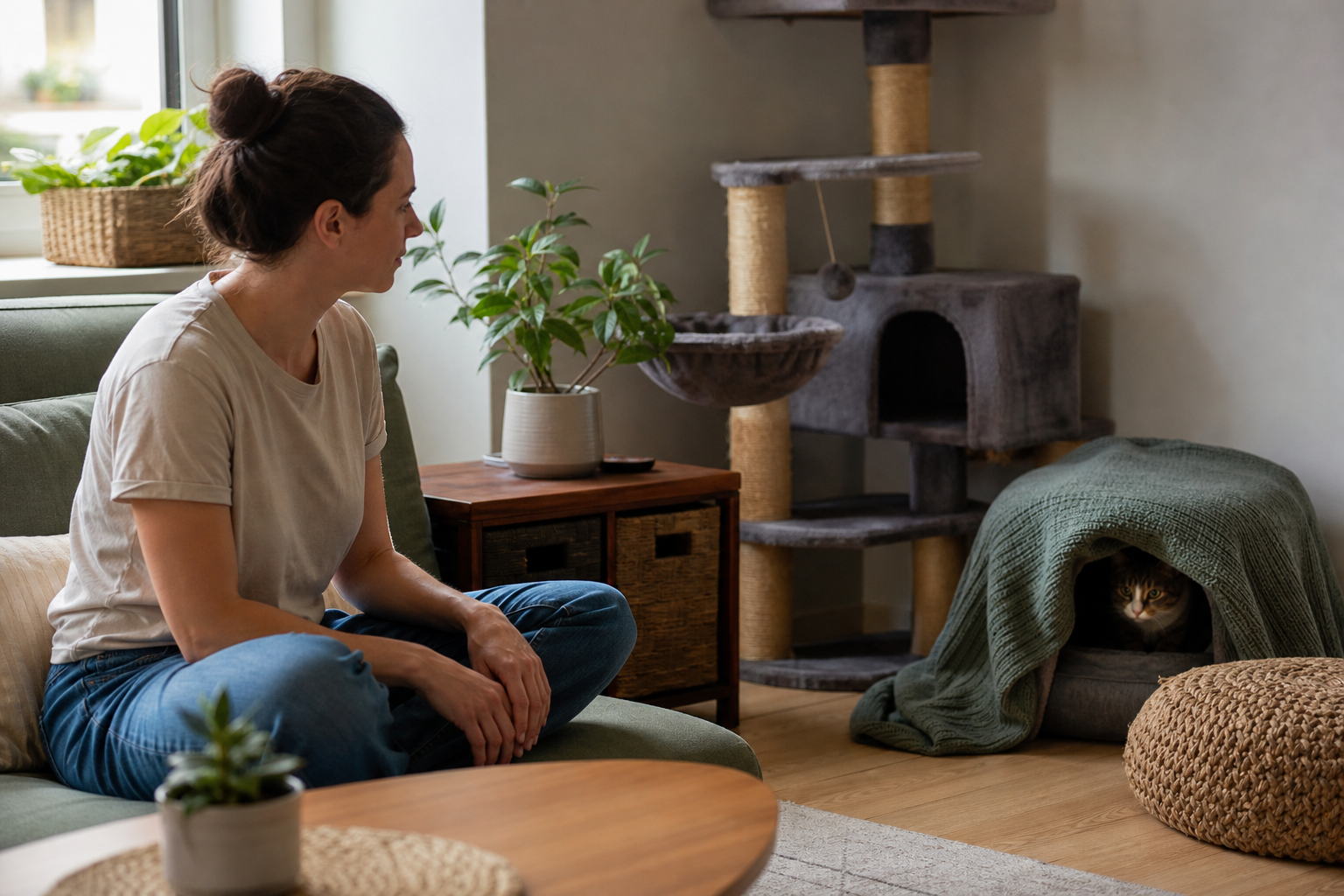
    2. Give space. Step back slowly and allow the cat a clear escape route.
    3. Stay quiet. Loud voices and sudden movement can increase arousal.
    4. Do not punish. Hitting, shouting, spraying water, or scruffing can increase fear and make future aggression more likely.
    5. Use a barrier if needed. A cushion, blanket, or door can help you separate yourself safely without confronting the cat.
    6. Allow time to decompress. Some cats need minutes, while others need much longer before they are ready for calm contact again.

    If a fight occurs between cats, avoid reaching in with bare hands. Instead, use a barrier, make distance, and separate them safely if possible.

    How to identify your cat’s triggers

    Reducing aggression usually starts with pattern recognition. Ask yourself a few simple questions after each incident.

    • What happened immediately before the aggression?
    • Who or what was nearby?
    • Was your cat being touched, picked up, cornered, or disturbed?
    • Did another cat appear outside?
    • Did the incident happen around food, toys, resting places, or litter boxes?
    • What body language appeared first?

    Write down the date, time, location, and possible trigger. This makes it easier to see whether the behaviour is linked to handling, visitors, resource competition, play, or a specific room or routine.

    Practical steps to reduce cat aggression at home

    1. Respect your cat’s warning signs

    Do not wait for a bite or scratch. If your cat’s tail starts twitching, the ears flatten, or the body stiffens, pause the interaction. Ending contact early teaches your cat that calm signals work, so it does not need to escalate.

    2. Improve the home setup

    Many aggressive incidents are linked to stress and competition. A more cat-friendly environment can reduce tension.

    • Provide multiple resting spots
    • Add vertical spaces such as cat trees or shelves
    • Place litter boxes in quiet, accessible locations
    • Offer more than one water and feeding station in multi-cat homes
    • Create hiding places for retreat and recovery

    Cats cope better when they can move away from people, noise, and other animals without feeling trapped.

    3. Use toys for play, not hands

    If your cat attacks ankles or hands, switch to interactive toys such as wand toys or tossed soft toys. Keep play sessions structured and end them before your cat becomes too intense. Avoid wrestling with your hands, as this teaches the cat that human skin is an acceptable target.

    4. Keep routines predictable

    Regular feeding, play, quiet time, and cleaning routines can help anxious cats feel more secure. Sudden changes in schedule, visitors, or household noise can contribute to stress-related aggression in some cats.

    5. Manage visual triggers

    If your cat becomes upset by animals outside, block access to the triggering view when needed. Frosted window film, curtains, or limiting access to a specific room may help reduce repeated arousal.

    6. Avoid forced handling

    If your cat dislikes being picked up, brushed, or medicated, break the task into smaller steps and pair calm behaviour with rewards. Short, gentle sessions are usually more effective than trying to “get it over with.”

    7. Support calm behaviour

    Reward your cat when it chooses relaxed, appropriate behaviour. Offer a treat, praise, or play when your cat stays calm during a trigger at a manageable distance. This helps build better associations over time.

    Special considerations for multi-cat homes

    Aggression between cats can be complex because some conflict is subtle. One cat may block hallways, stare, guard food, or control access to litter boxes without obvious fighting.

    To reduce household tension:

    • Provide separate resources in different areas
    • Do not force cats to share sleeping, feeding, or toileting spaces
    • Give each cat escape routes and vertical territory
    • Separate cats after serious conflict and reintroduce gradually if needed
    • Watch for quiet bullying, not just loud fights

    If aggression is frequent or intense, professional behaviour support may be needed to create a safe reintroduction plan.

    Mistakes that often make aggression worse

    • Punishing the cat after a bite or scratch
    • Ignoring early warning signs
    • Using hands as toys
    • Forcing interaction when the cat wants distance
    • Making sudden changes without giving the cat time to adjust
    • Assuming the behaviour is “spite” rather than a stress response

    Cats do not usually become aggressive to be difficult. In many cases, they are trying to protect themselves, stop an unpleasant interaction, or cope with stress they cannot manage well.

    When to contact a veterinarian or qualified behaviour professional

    Seek veterinary advice if aggression appears suddenly, becomes more severe, is linked to touch or movement, or happens alongside changes in appetite, litter box habits, grooming, or activity. Pain or illness can contribute to behaviour changes, and a medical check is an important step.

    You should also get extra support if bites are frequent, household members feel unsafe, or there is serious conflict between pets. A qualified feline behaviour professional can help identify triggers and create a structured plan based on your cat’s environment and history.

    Keeping track of incidents can help

    Because aggression often follows patterns, it helps to record what happened before, during, and after each event. Notes about time of day, location, body language, nearby pets, visitors, feeding, and handling can make triggers clearer. For busy households, keeping this information in one place can be easier with a digital pet organizer such as PLM Pet Life Manager, especially when more than one family member cares for the cat.

    Final thoughts

    Cat aggression can be stressful, but it is often manageable when you look beyond the outburst and focus on the cause. Start with safety, learn your cat’s early signals, reduce triggers, and make the environment easier to navigate. Small changes in handling, play, routine, and home setup can make a meaningful difference over time.

    If the behaviour is sudden, intense, or linked to possible discomfort, do not delay getting veterinary advice. Early support is often the best way to protect both your cat’s wellbeing and your household’s sense of calm.

    https://pet.ckventures-websites.com/

  • Bird Enrichment at Home: Simple Ways to Keep Pet Birds Mentally Active

    Bird Enrichment at Home: Simple Ways to Keep Pet Birds Mentally Active

    Pet birds are intelligent, curious animals that need more than food, water, and a clean cage. In the wild, many birds spend large parts of the day flying, foraging, climbing, socializing, and exploring changing environments. At home, a safe routine is important, but too little stimulation can lead to boredom and unwanted behaviours such as excessive screaming, feather damaging, or repetitive pacing.

    Good enrichment helps pet birds use their natural behaviours in healthy ways. It does not need to be expensive or complicated. With a thoughtful setup and a few regular changes, you can create a more interesting daily life for your bird while keeping safety in mind.

    What bird enrichment really means

    Enrichment is anything that encourages your bird to think, move, explore, and interact with its environment. The goal is not constant excitement. The goal is appropriate mental and physical activity that suits the species, age, personality, and confidence level of the individual bird.

    Useful enrichment often supports one or more natural behaviours:

    • Foraging for food
    • Climbing and balancing
    • Chewing and shredding
    • Vocal interaction and social contact
    • Problem solving and exploration
    • Bathing and preening

    Even small birds such as budgies, canaries, and cockatiels benefit from variety. Larger parrots usually need even more structured enrichment because they are highly intelligent and often very active.

    Signs your bird may need more stimulation

    Every bird is different, and behaviour can change for many reasons, including stress or health problems. Still, a lack of enrichment can contribute to common issues. You may need to review your bird’s daily routine if you notice:

    • Frequent screaming or calling without an obvious trigger
    • Chewing cage bars constantly
    • Feather picking or over-preening
    • Repetitive movements such as pacing or head bobbing
    • Low interest in toys or surroundings
    • Frustration during time alone
    • Weight gain linked to inactivity

    If a behaviour change is sudden, severe, or combined with signs of illness, contact an avian veterinarian or a qualified bird professional rather than assuming it is only boredom.

    How to build a simple enrichment routine

    Many owners buy toys but do not have a plan for how their bird will actually use them. A better approach is to create a daily and weekly enrichment routine.

    Step 1: Start with natural behaviours

    Watch what your bird already enjoys. Does it shred paper, climb ropes, toss objects, or search through food? Use those preferences as a guide. Enrichment works best when it matches the bird’s natural interests.

    Step 2: Offer variety without overload

    Too many changes at once can frighten some birds. Introduce one or two new items at a time, especially with shy individuals. Place new objects near the cage first if your bird is cautious, then move them inside when the bird appears comfortable.

    Step 3: Rotate items regularly

    Birds often ignore toys they see every day. Rotate toys, perches, and activity stations to keep the environment interesting. You do not need a large collection. A smaller set used in rotation is often more effective.

    Step 4: Include active and quiet options

    Some enrichment should encourage movement, such as climbing areas or hanging toys. Other options can be calmer, like a foraging tray, soft music, or supervised window time in a secure area. Balance matters.

    Easy enrichment ideas for pet birds

    Foraging activities

    Foraging is one of the most valuable forms of enrichment because it makes mealtime more mentally engaging.

    • Wrap a small portion of bird-safe food in plain paper for your bird to tear open
    • Hide pellets or treats in cardboard cups or safe foraging toys
    • Scatter food in a shallow tray filled with clean paper strips
    • Thread leafy greens through cage bars to encourage exploration

    Begin with easy puzzles so your bird succeeds quickly. If food is too difficult to access, your bird may become frustrated and give up.

    Shredding and chewing materials

    Many pet birds enjoy destroying safe materials. This is normal and useful behaviour.

    • Untreated paper
    • Plain cardboard
    • Bird-safe wood toys
    • Palm leaf or seagrass items made for birds
    • Vegetable-tanned leather parts in bird toys when appropriate

    Always choose products intended for birds or carefully check that homemade items are free from toxic glues, inks, loose threads, sharp metal, or unsafe coatings.

    Climbing and movement opportunities

    Physical activity supports both fitness and confidence. Add variety with:

    • Different perch widths and textures
    • Rope perches used safely and checked for wear
    • Ladders and swings for birds that enjoy them
    • A supervised play stand outside the cage
    • Safe out-of-cage time in a bird-proofed room

    Perches are especially important. A cage with only one or two identical dowels gives very little physical challenge.

    Training as enrichment

    Short, positive reinforcement training sessions can be excellent enrichment. Many birds enjoy learning simple behaviours such as stepping up, targeting, turning around, or entering a carrier calmly. Training helps build communication and gives your bird a structured mental challenge.

    Keep sessions short and end while your bird is still interested. Never force participation.

    Sensory enrichment

    Birds notice sound, light, texture, and activity around them. Safe sensory enrichment may include:

    • Supervised access to natural daylight without drafts or overheating
    • A secure view from a window, while avoiding stress from outdoor predators
    • Bird-safe bathing opportunities
    • Fresh bird-safe branches when appropriate and correctly identified
    • Household sounds or calm music at a reasonable volume

    Be careful with mirrors. Some birds become overly attached or territorial around them, so they are not ideal for every individual.

    Common enrichment mistakes to avoid

    • Leaving the same toys in place for months
    • Giving toys that are too large, too complex, or frightening
    • Offering unsafe materials with toxic finishes or loose fibres
    • Using enrichment only on weekends instead of daily
    • Overcrowding the cage so there is little room to move
    • Assuming social birds can stay content with no interaction

    Enrichment should make the environment more usable, not cluttered. Birds still need space to stretch, climb, and move between food, water, and resting areas.

    How often should you change enrichment?

    There is no single schedule that suits every bird. A practical approach is to make small changes several times a week and larger rotations every one to two weeks. Some birds love novelty, while others need slower changes. Watch your bird’s response and adjust.

    You can keep a simple note of which toys, foods, and activities your bird enjoys most. This is especially useful in multi-bird homes, where preferences can be very different. A pet organization tool such as PLM Pet Life Manager can help you record routines, reminders, and observations so enrichment stays consistent over time.

    Creating a safer enriched environment

    Enrichment should always be safe first. Before introducing a new item, check for:

    • Sharp edges or small detachable parts
    • Rusty clips or unsafe metals
    • Long threads that could tangle toes or necks
    • Items treated with paint, glue, or chemicals not intended for birds
    • Plants or branches that have not been confirmed bird-safe

    Supervise your bird with unfamiliar toys until you know how it interacts with them. Remove damaged items promptly.

    A simple weekly bird enrichment plan

    1. Choose one foraging activity for each day
    2. Rotate two or three toys midweek
    3. Offer several short social or training sessions
    4. Refresh shredding materials as they are destroyed
    5. Schedule supervised out-of-cage activity when possible
    6. Observe which items your bird uses most
    7. Remove worn or unsafe objects during cleaning

    This kind of routine is realistic for many households and can make a noticeable difference without requiring a major budget.

    Final thoughts

    Bird enrichment is not about filling a cage with random toys. It is about helping your bird live a more active, engaging, and species-appropriate life. Start with simple foraging ideas, safe chewing materials, climbing opportunities, and gentle training. Then adjust based on what your bird actually enjoys.

    Small daily efforts usually work better than occasional big changes. By paying attention to your bird’s behaviour and rotating enrichment regularly, you can support better welfare, reduce boredom, and make life at home more interesting for your feathered companion.

    https://pet.ckventures-websites.com/

  • How to Create a Simple Pet Care Routine That Actually Works

    How to Create a Simple Pet Care Routine That Actually Works

    Many pet owners know what they should do for their dog or cat, but daily life often gets in the way. Feeding times shift, grooming gets delayed, exercise becomes inconsistent, and important health dates can be hard to remember. A simple pet care routine helps you stay organized, reduces stress, and supports your pet’s long-term wellbeing.

    The good news is that an effective routine does not need to be complicated. The best plan is one you can follow consistently. Whether you live with one cat, an active dog, or several pets with different needs, a clear structure makes responsible pet ownership easier.

    Why a routine matters for pets

    Dogs and cats both benefit from predictability. Regular care supports physical health, behavior, and emotional security. Pets often feel more settled when meals, walks, play, rest, and grooming happen around the same general times each day.

    A routine also helps owners notice changes earlier. If you regularly track appetite, drinking, toilet habits, activity, coat condition, and mood, you are more likely to spot something unusual and contact your veterinarian when needed.

    Start with your pet’s basic daily needs

    Before building a schedule, list the care tasks your pet needs every day. Keep the list practical and realistic. Most routines should include the following categories.

    Food and water

    • Feed measured meals at consistent times.
    • Provide constant access to fresh water unless your veterinarian has advised otherwise.
    • Monitor appetite and note any sudden loss of interest in food.
    • Limit treats so they do not replace balanced meals.

    Exercise and movement

    • Dogs usually need daily walks and opportunities to explore safely.
    • Cats need active play, climbing, and movement indoors, especially if they do not go outside.
    • Adjust exercise to age, breed tendencies, health status, and weather conditions.

    Toilet and hygiene

    • Take dogs out regularly, especially puppies, senior dogs, and dogs in training.
    • Scoop litter boxes daily and keep them clean and easy to access.
    • Check for changes in urination or bowel movements.

    Affection and mental stimulation

    • Spend one-on-one time with your pet every day.
    • Use short training sessions, food puzzles, scent games, or interactive toys.
    • Give pets quiet rest time as well as activity.

    Build your routine around real life

    A pet care routine works best when it fits your actual schedule, not your ideal one. If mornings are busy, keep the morning routine simple and move longer walks, grooming, or play to the evening. If several family members help with care, decide clearly who is responsible for each task.

    Try matching pet care tasks with habits you already have. For example, feed breakfast before your own breakfast, do an evening dog walk after work, or clean the litter box before brushing your teeth at night. Linking pet care to existing routines makes consistency easier.

    A sample daily pet care routine

    Every household is different, but this example shows how a basic routine can look.

    Morning

    1. Refresh water bowls.
    2. Feed breakfast.
    3. Take the dog out for a toilet break and walk, or schedule active play for your cat.
    4. Check your pet’s general condition, including energy, appetite, and comfort.
    5. Scoop the litter box or clean up outdoor toilet areas.

    Midday

    1. Provide a toilet break for dogs if needed.
    2. Offer a short play session, enrichment toy, or rest period.
    3. Check water again in warm weather or for pets that drink more frequently.

    Evening

    1. Feed the next meal.
    2. Walk the dog or engage your cat in interactive play.
    3. Do quick grooming if needed, such as brushing, wiping paws, or checking ears.
    4. Clean feeding areas and litter trays.
    5. Settle your pet into a calm bedtime routine.

    Do not forget weekly and monthly care tasks

    Daily routines are important, but some responsibilities happen less often. These can be easier to miss because they are not part of the everyday pattern.

    Weekly tasks

    • Brush your pet thoroughly if the coat requires it.
    • Wash bedding, blankets, and food bowls properly.
    • Check nails, skin, ears, and coat condition.
    • Weigh your pet if regular weight monitoring is recommended.
    • Restock food, litter, waste bags, or grooming supplies.

    Monthly or occasional tasks

    • Review parasite prevention dates.
    • Check vaccination and veterinary appointment records.
    • Update identification details if your contact information has changed.
    • Inspect carriers, leads, harnesses, and collars for wear.
    • Review behavior or health notes for any developing patterns.

    Adjust the routine for age and health

    No single routine suits every pet. Puppies and kittens need more frequent feeding, toilet support, supervision, and short learning sessions. Senior pets may need gentler exercise, more comfort breaks, easier access to beds or litter trays, and closer monitoring for changes in mobility or behavior.

    Pets with ongoing health conditions may also need special timing for meals, monitoring, or follow-up care. If your veterinarian has given specific instructions, those should always take priority over general routine advice.

    Signs your routine may need improvement

    If your current system is not working, your pet may show signs of inconsistency or unmet needs. Common warning signs include missed meals, forgotten medications or appointments, irregular walks, a dirty litter box, boredom-related behavior, or frequent confusion between family members about who has done what.

    You may also notice that you are always reacting to problems instead of preventing them. A better routine should make care feel calmer and more predictable.

    How to make the routine easier to keep

    Simple systems usually work best. Try these practical steps.

    • Keep feeding tools, leads, grooming items, and cleaning supplies in one place.
    • Use a visible checklist for shared pet care tasks.
    • Prepare measured meals in advance if your schedule is hectic.
    • Set reminders for grooming, preventive care, and veterinary visits.
    • Record changes in appetite, weight, behavior, or symptoms so you do not rely on memory alone.

    For households with multiple pets, organized record keeping becomes even more important. It is easy to forget which pet ate less, when a flea treatment is due, or who had the last grooming session.

    When to contact a veterinarian

    A routine helps you observe your pet, but it does not replace professional veterinary care. Contact your veterinarian if you notice ongoing vomiting or diarrhea, difficulty urinating, major appetite changes, breathing problems, sudden lethargy, unexplained pain, collapse, or any other signs that concern you. If something seems urgent, seek prompt veterinary attention rather than waiting to see whether the routine resolves it.

    Using organization tools to stay consistent

    Many owners find that routine becomes much easier when information is stored in one place. Keeping feeding notes, appointment dates, health observations, and important pet details together can reduce mistakes and help everyone in the household stay informed.

    If you prefer digital organization, PLM Pet Life Manager can be a practical way to keep your pet’s information accessible and support more consistent daily care. That can be especially useful if you manage multiple pets or share responsibilities with family members.

    Final thoughts

    The best pet care routine is not the most detailed one. It is the one that fits your pet’s needs and your daily life well enough to be followed consistently. Start small, focus on essentials, and refine the plan as you learn what works best for your household.

    With a clear routine, you can spend less time worrying about what you may have forgotten and more time enjoying life with your pet.

    https://pet.ckventures-websites.com/